


Page 61 - Science Course 2 (Book 1)
P. 61
Mo2-L4b:  How Does the Body Move?


        Most of the information then is sent to the central
        nervous system for processing.

        After the central nervous system processes
        information, it signals the peripheral nervous
        system to respond.


                                                             The visual system           The olfactory
                                                                receives light        system receives order
                                                                  signals.                  signals


                                                            The auditory system    There are many different
                                                               detects sound.       sensory receptors for
        The body carries out both voluntary and involuntary                          touch. Some receive
        functions that depend on the nervous system.                                 signals that detect
                                                                                        temperature
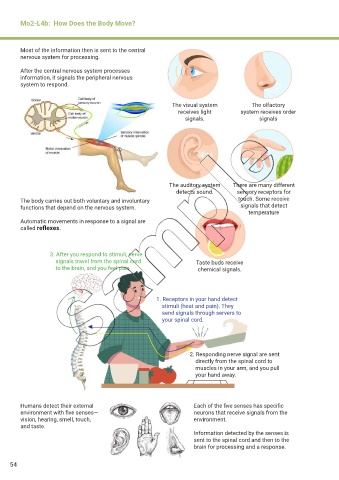
        Automatic movements in response to a signal are
        called reflexes.


                   3. After you respond to stimuli, nerve
                       signals travel from the spinal cord            Taste buds receive
                       to the brain, and you feel pain                chemical signals.


                                                        1. Receptors in your hand detect
                                                            stimuli (heat and pain). They
                                                            send signals through servers to
                                                            your spinal cord.


                                                                    2. Responding nerve signal are sent
                                                                        directly from the spinal cord to
                                                                        muscles in your arm, and you pull
                                                                        your hand away.


        Humans detect their external                                 Each of the five senses has specific
        environment with five senses—                                neurons that receive signals from the
        vision, hearing, smell, touch,                               environment.
        and taste.
                                                                     Information detected by the senses is
                                                                     sent to the spinal cord and then to the
                                                                     brain for processing and a response.


     54

