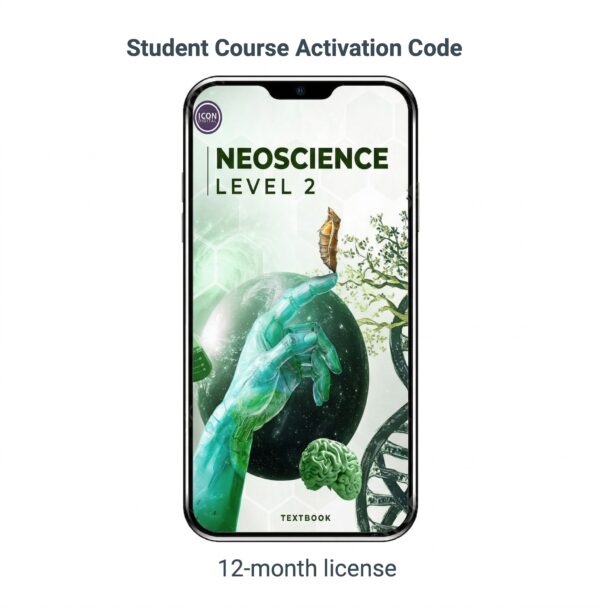
The modules and lessons are:
Module 01: Introduction to Science
L1 – What is In an Atom?
L2 – How was The Atomic Model Developed?
L3 – How has Science Knowledge Developed Over the Years?
Module 02: Introduction to Solutions
L1 – Solute, Solvent, and Solution
L2 – What are Solubility and Concentration?
L3 – Factors that Affect Solubility
Module 03: Human Anatomy
L1 – Components of the Circulatory System
L2 – Blood Vessels and Blood Groups
L3 – How does Blood Flow from the Heart to the Lungs and Other Parts of the Body?
L4 – How does the Body Inhale and Exhale?
L5 – How Do Nutrients Enter and Leave the Body?
L6 – Parts of a Nervous System
L7 – How is the Brain Linked with the Nervous System?
L8 – What are the Reproductive Systems of Humans?
L9 – What is Puberty?
L10 – How Do Humans Grow and Develop?
L11 – Use of Contraception
Module 04: Motion and Forces
L1 – What is Motion?
L2 – How to Describe an Object’s Position?
L3 – How Do We Describe Changes in Position?
L4 – What are Speed, Velocity, and Acceleration?
L5 – Speed and Velocity: Graph and Calculations
L6 – Acceleration: Graph and Calculations
L7 – Introduction to Newton’s Law of Motion
L8 – What is Newton’s First Law of Motion?
L9 – What is Newton’s Second Law of Motion?
L10 – What is Newton’s Third Law of Motion?
L11 – What are Forces?
L12 – What are Balanced and Unbalanced Forces?
L13 – How Does Gravity Affect Forces?
L14 – What is Friction?
L15 – How Does Friction Affect Forces?
L16 – Buoyancy Force
L17 – Finding the Moment of an Object
L18 – What are Magnets?
L19 – What is a Magnetic Domain?
L20 – What is an Electromagnet?
Module 05: Work, Energy, and Simple Machines
L1 – What is the Relationship Between Work and Power?
L2 – What are Simple Machines?
L3 – What are Complex Machines?
L4 – What is Mechanical Efficiency?
L5 – What is Energy?
L6 – What are the Forms of Energy?
L7 – What are Kinetic and Potential Energy?
L8 – What is Energy Transformation?
L9 – What is the Law of Conservation of Energy?
Module 06: Separation Process
L1 – How to Perform Crystallization and Distillation?
L2 – Separation using Chromatography and Retention Factor
Module 07: Earth and Changes Around Us
L1 – What is the Structure of the Geosphere?
L2 – What are the Layers of the Atmosphere?
L3 – What are Earthquakes?
L4 – Monitoring Earthquake Activity
L5 – What are Physical and Chemical Weathering?
L6 – What Changes Earth’s Surface?
L7 – How Does Weathering Affect Earth’s Surface?
L8 – What is Deposition and Erosion?
L9 – What is Plate Tectonics?
L10 – What Forces Change Earth’s Surface?
L11 – Types of Plate Boundaries
L12 – Why do Tectonic Plates Move?
L13 – What is Continental Drift?
L14 – How are Volcanoes Formed?
L15 – How Do Soils Vary at Different Depths?
L16 – How Different Types of Soil Texture Affectthe Growth of Plants?
Module 08: Energy Resources
L1 – What are Renewable and Nonrenewable Energy Resources?
L2 – How are Fossils Formed?
L3 – Formation of Fossil Fuels
L4 – How to Manage Nonrenewable Energy Sources?
L5 – What are the Renewable Energy Resources?
L6 – How to Manage Renewable Energy Resources?